
Mumbai 3 0 Real Estate Insights Why Aureus Property Advisors Recommends Hiranandani Fortune City Panvel

Updated: Aug 22
Panvel is no longer just a distant alternative to Mumbai. It is becoming one of the clearest examples of how the city’s next phase of growth is moving towards better-connected, planned, and larger-format living spaces.
The phrase Mumbai 3.0 is often used to describe this shift. The first Mumbai was the island city. The second was the suburban expansion. The third is taking shape across Navi Mumbai, Panvel, the harbour belt, and the growth corridors linked by new roads, rail, airport plans, and organised townships.
For homebuyers and land investors, this is not only a story about “future potential”. It is about checking what is already visible on the ground: transport links, developer credibility, social infrastructure, land availability, and liveability. That is also why Aureus Property Advisors recommends Hiranandani Fortune City in Panvel for buyers looking at a branded township with long-term value.
Aureus Property Advisors works with clients interested in land and primary projects, meaning land parcels and homes bought directly from developers rather than through resale. In a market where choices can feel confusing, that focus matters.
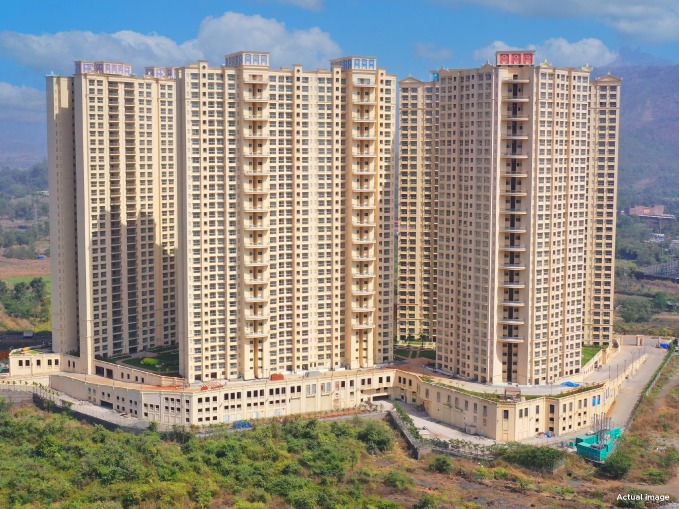
Why the next real estate growth story is shifting towards Panvel
Mumbai’s core real estate challenge is simple: demand is high, but space is limited. The island city and mature suburbs have strong value, but many new buyers face three issues.
High ticket sizes
Smaller homes
Heavy congestion
That has pushed demand towards areas where homes can be more spacious, townships can be planned from scratch, and future transport links can improve daily travel.
Panvel fits this shift because it sits at the meeting point of several growth drivers:
The Mumbai-Pune Expressway
The Sion-Panvel Highway
The suburban rail network
The upcoming Navi Mumbai International Airport area
The wider Navi Mumbai growth belt
Access towards the Jawaharlal Nehru Port region
These are not vague promises. The Mumbai Trans Harbour Link, also known as Atal Setu, opened to traffic in January 2024 and connects Sewri in Mumbai to the Navi Mumbai side near Nhava Sheva. This has changed how people view the harbour side of the region. It does not make every location equally valuable, but it does give more weight to areas that already had land, road access, and planned development.
Panvel benefits because it is not a single-lane growth story. It has older residential pockets, railway access, highway access, industrial and port-linked employment nearby, and new township-led development. That mix gives it more depth than a location that depends on only one future project.
The key point is timing. The best real estate markets usually do not become attractive only after every bridge, road, school, and commercial hub is fully complete. They become attractive when enough pieces are in place, and enough credible future development is visible.
Panvel is in that middle zone. It is no longer early enough to be purely speculative, but it is not so mature that all future value has already been priced in.
What makes Panvel different from many other growth markets
Not every “future location” becomes a good real estate market. Some areas look promising on a map but struggle because of weak access, unclear land ownership, slow public works, or poor maintenance.
Panvel has a stronger case because it combines four things that buyers can evaluate more clearly.
Factor | What it means for buyers | Why it matters in Panvel |
Connectivity | Roads and rail links that support movement | Panvel connects towards Mumbai, Pune, Navi Mumbai, and the port region |
Land availability | Space for larger housing formats | Townships can offer gardens, internal roads, and amenities |
Demand base | People who may live, work, or invest there | Demand can come from Mumbai, Navi Mumbai, Pune-linked workers, and airport-linked activity |
Developer presence | Established builders choosing the area | Branded projects improve buyer confidence when approvals and delivery are clear |
The upcoming Navi Mumbai International Airport is one of the most discussed drivers. Airports often influence property markets because they bring jobs, hotels, logistics, road upgrades, and new services. That said, buyers should avoid assuming instant price jumps. Airport-led growth usually plays out over years.
The better way to look at it is this: the airport adds another reason for the region to receive attention, investment, and improved access. Panvel already had enough reasons before the airport discussion became mainstream. The airport strengthens the case, but it should not be the only reason to buy.
Another factor is liveability. Many buyers moving from cramped city homes now look for a more complete residential setting. They want open areas, walking spaces, security, schools nearby, shops, and health care access. A standalone building may offer a flat, but a township can offer a fuller daily life.
That is where Panvel has an edge. The market has the land required for larger gated communities and integrated townships. These formats are harder to create in central Mumbai and older suburbs because land parcels are smaller and more expensive.

Why Aureus Property Advisors recommends Hiranandani Fortune City in Panvel
Aureus Property Advisors recommends Hiranandani Fortune City because it matches several practical filters that serious buyers should use before shortlisting a home.
The first filter is developer track record. Hiranandani is widely known in Mumbai and Thane for large planned developments, especially in Powai and Thane. While every project must still be checked on its own approvals, timelines, and current status, a developer’s past experience in township planning is a meaningful factor.
The second filter is township design. Large projects can offer features that scattered buildings often cannot. These may include internal roads, gardens, club facilities, retail areas, and phased development. For families, this can improve daily comfort. For investors, it can help resale appeal because the project has a recognisable identity.
The third filter is location logic. Panvel sits on a growth path connected to the airport, highways, rail movement, and Navi Mumbai’s wider development. A project in this belt can benefit if the surrounding area continues to improve in a planned way.
The fourth filter is primary market clarity. Since Aureus Property Advisors works with primary projects, buyers can compare developer inventory, payment plans, construction stages, and unit options directly. This can be useful for new buyers who want a clearer process than negotiating individual resale homes.
Aureus also deals in land, which gives it a wider view of how the region is moving. Land markets often reveal where long-term interest is building. When land values, infrastructure work, and branded residential projects move in the same direction, the location usually deserves closer study.
That does not mean every buyer should choose the same unit or budget. A good recommendation still needs to match the buyer’s purpose.
End-use buyers may prefer ready or near-ready homes and daily convenience.
Long-term investors may look at construction-linked stages and future access.
Land buyers may focus on title clarity, zoning rules, and nearby development.
Second-home buyers may value open space, views, and township amenities more.
Aureus Property Advisors’ role is to help buyers read these choices with more context. The value is not only in showing options. It is in helping buyers avoid weak locations, unclear paperwork, and unrealistic promises.
What buyers should check before investing in a Panvel project
A strong location does not remove the need for careful checks. Real estate decisions involve large sums of money, and even a good market can have poor choices inside it.
Start with the approval status. In Maharashtra, real estate projects must be registered with the state real estate authority if they fall under the law’s rules. Buyers should check the project registration, construction status, promised possession timeline, and any updates shared by the developer.
Next, compare the total cost, not just the base price. A flat’s final cost can include floor rise charges, parking, stamp duty, registration, maintenance deposits, club charges, and taxes. Two homes with similar base pricing can end up with very different final amounts.
Also check the travel pattern. A location may look close on a map but feel different during peak hours. Visit the site on a working day if possible. Check access to the railway station, highway entry points, schools, clinics, local markets, and daily services.
For land purchases, checks become even more important. Buyers should verify ownership records, road access, permitted use, and whether the land is clear for the planned purpose. Land can offer strong long-term value, but it requires more care than buying a flat in a registered project.
Here is a simple checklist before moving ahead:
Confirm the developer and project details through official records.
Visit the site and surrounding area in person.
Compare the full cost across similar projects.
Ask about maintenance costs and township rules.
Check daily travel routes, not only distance.
Review all documents with a qualified property lawyer.
Avoid decisions based only on expected future price growth.
Real estate can build wealth, but it also carries risk. This article is for general information only and should not be treated as financial or legal advice.

Why this recommendation is about more than price appreciation
Many property conversations focus only on future price growth. That is too narrow.
A home or land parcel should be judged on three outcomes.
The first is use value. Can someone live there comfortably? Are the roads usable? Are shops, schools, and health care within reach? Does the project feel safe and maintained?
The second is market value. Will other buyers recognise the location and the project name when it is time to sell? Branded townships often have an advantage because they are easier to identify and compare.
The third is holding comfort. Can the buyer manage payments, maintenance, and waiting time without stress? A good project can still become a poor decision if the budget is stretched too far.
Panvel’s advantage is that it has a real end-use story along with an investment story. People are not only buying because of a future airport or a new bridge. They are also buying because Navi Mumbai and its surrounding belt continue to attract residents who want more room, better planning, and relatively better access to major work zones.
This is why Aureus Property Advisors’ recommendation of Hiranandani Fortune City is practical rather than hype-led. The project sits within a larger Panvel story, but it also has its own strengths as a branded township. That combination is what buyers should look for.
The stronger real estate decision is not the one based on the loudest claim. It is the one where the location, developer, paperwork, budget, and future use all make sense together.

The takeaway for buyers looking at Panvel
Panvel is becoming one of the most important real estate markets in the wider Mumbai region because it offers what the older city often cannot: larger planned developments, stronger future infrastructure links, and room for township living.
Aureus Property Advisors focuses on land and primary projects, which puts it close to the parts of the market where long-term growth often begins. Its recommendation of Hiranandani Fortune City in Panvel rests on clear factors: a known developer, township planning, improving connectivity, and the wider rise of Navi Mumbai’s growth belt.
The best next step is simple. Study the location, visit the project, compare total costs, and check the paperwork before deciding. Panvel has a strong case, but the right property still depends on fit, timing, and budget.


Comments